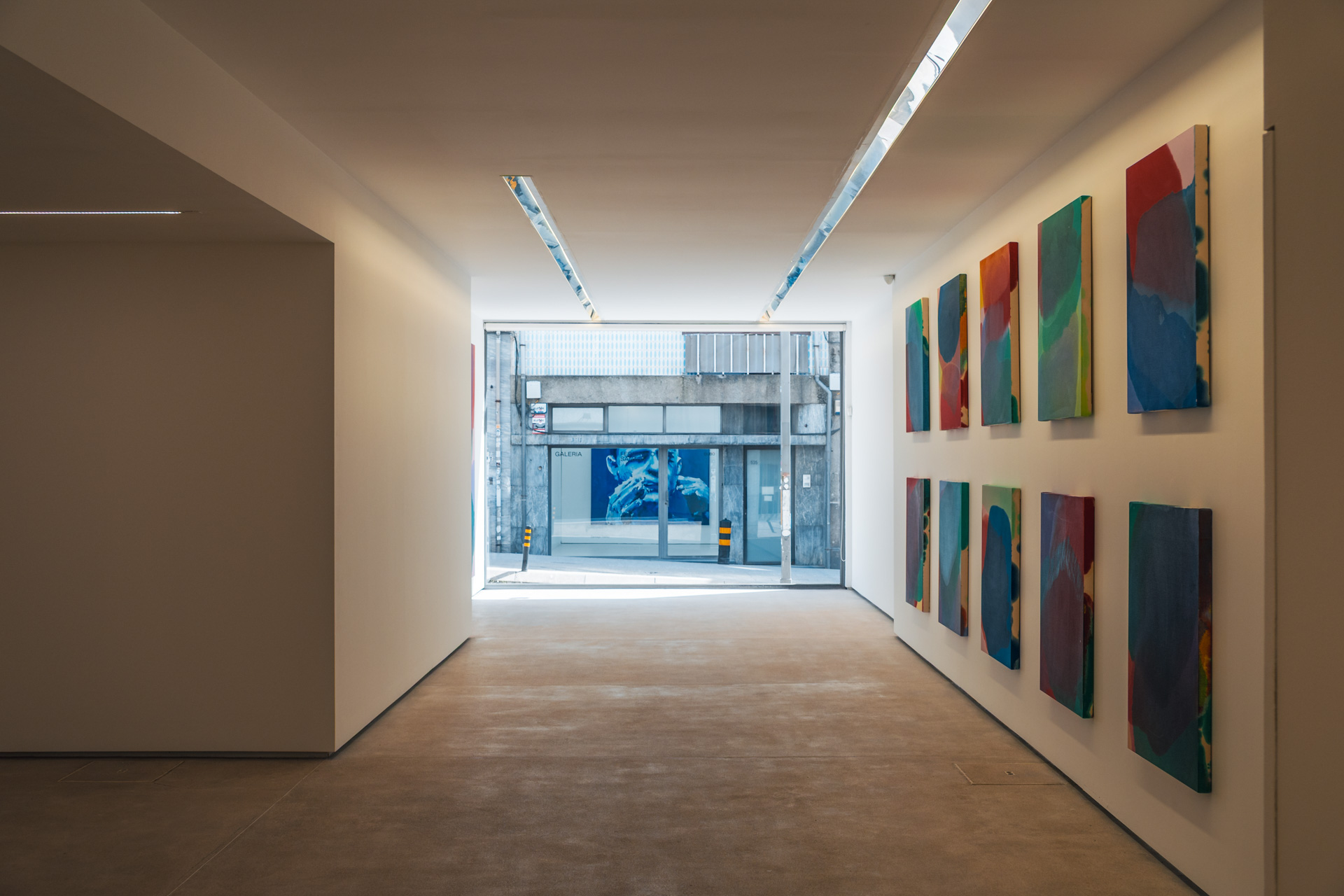
Fernando Santos, a gallerist with roots in Amarante, was born into an environment immersed in art — his father collaborated with the Amadeo de Souza-Cardoso Museum, which sparked his early interest in visual culture. At the age of 22, he opened the first contemporary art gallery in Amarante. In the late 1980s, he joined Galeria Nasoni, where he spent seven years — a time he describes as a true “university.”
In 1993, he launched his own gallery in Porto, and later in Lisbon as well.
Today, Galeria Fernando Santos is a national reference point, a symbol of persistence and vision, and a key part of the formation of the Quarteirão das Artes (Art District) on Miguel Bombarda Street.
Career and Creative Identity
Q: Fernando, tell us — who is the man behind Galeria Fernando Santos?
A: I’m someone who enjoys what I do. I was born connected to the Amadeo de Souza-Cardoso Museum in Amarante, and I’ve developed this project over nearly 40 years, always with passion. The close relationship with artists and collectors has grown stronger over time.
Q: What influence did your father’s work at the Amadeo de Souza-Cardoso Museum in Amarante have on your artistic path, especially within a different artistic movement: contemporary art?
A: I grew up in that institutional setting. My father brought me very close to the museum, and it was there that my love for art was born. Without that, I might never have chosen this profession. Culture requires work and persistence. Cultivating a taste for collecting is a process of trust — and the gallery has carried out that work seriously, alongside artists and collectors.
Q: Can you tell us a bit about the work that’s been done between the gallery, artists, and collectors?
A: I started in Amarante, then moved to Galeria Nasoni — a very important project where I spent seven years. Later, I settled on Miguel Bombarda Street, where I’ve been since 1997. I also had a gallery in Lisbon but decided to focus on Porto. Today we occupy an entire block and provide a real cultural service to the city.
Q: I read in an interview with “Arte Capital” that your collaboration with Galeria Nasoni was your passport into the “Invicta City” (Porto). Why do you describe this gallery as a true “university”?
A: Because there are no schools for training gallerists. You learn through direct contact with artists and collectors. Galleries are the real schools, where team members gain experience before creating their own spaces or moving on to work in museums and institutions.
Q: What was in the mind of a young man who, at 22, decided to open his own art gallery? What were your aspirations back then?
A: It happened by chance and opportunity. In 1993, the gallery was located on Rua D. Manuel II, but Miguel Bombarda Street had available spaces at affordable prices. I moved here around 1997.
Miguel Bombarda and the Start of a Movement
Q: You’re considered a pioneer in this area. How did the process of attracting colleagues to form what we now know as the “Art District” happen?
A: The process was natural. There were vacant spaces, and other gallerists eventually joined in. Over time, the city reinvented itself. The title “Porto Capital of Culture” gave a huge boost, and tourism also helped. But for there to be tourism, there must be culture — and it's our job to offer quality proposals so that those who visit leave with a good impression of the city.
Spaces and Accessibility
Q: The gallery has grown and interconnected several spaces — Project Room, CUBO, Espaço 531. What motivated you to expand?
A: The expansion came after a 15-year wait until we found the ideal space. Today, the gallery covers about 1,200 square meters. We unified the spaces to enhance the exhibition experience. We can’t stand still — there are always new projects underway.
Art, Community, and Urban Culture
Q: You've said the relationship between artist, gallerist, and collector is almost like family. How do you build those bonds of trust?
A: By being honest and consistent; trust takes time to build. Beyond exhibitions, we promote gatherings, talks, and collaborations with museums and art centers in various cities. These partnerships strengthen the art scene and bring people together.
Q: Do you envision a museum of Portuguese contemporary art that does justice to what’s being produced today?
A: No, I’ve never thought about that (laughs). The gallery already functions as an active art center, with exhibitions and events throughout the year. I’m also a collector, and my focus is on balancing good investments with good art.
Recent Challenges
Q: How has Galeria Fernando Santos' recent experience at ARCOlisboa 2025 been? After all, in 2024 you attended and “sold almost everything.” What’s your assessment this year?
A: We’ve been participating in art fairs for many years. They’re unique opportunities to promote artists, meet new collectors, and understand what’s happening in contemporary art. ArcoLisboa is now a benchmark event, with strong international presence and excellent networking opportunities. I recommend everyone to visit art fairs — it's the best way to understand the current art scene.
Looking Ahead
Q: What do you see for the Art District in 5 or 10 years?
A: I’d like the city council to make the street more pleasant and accessible — maybe pedestrian-only, with wider sidewalks. Right now, cars are parked on the sidewalks, and mobility is poor. Creating culture means bringing people into the streets, and we need the conditions for that: accessible, safe spaces where families and children can move around comfortably.
Q: What are your plans for Galeria Fernando Santos?
A: To continue doing what we’ve been doing: supporting artists, energizing the Art District, and making the city more appealing. Educating people about art is our contribution, so that Porto understands us, visits us, and welcomes us.
As you walk down Miguel Bombarda Street, Fernando Santos’ legacy is clear: more than a gallery, it’s a space for encounters and discoveries. Thirty years on, Galeria Fernando Santos continues to pulse with energy — between tradition and innovation, established artists and emerging ones.
The true impact lies in human relationships, in the community built, and in how an entire district reinvented itself around it. For Fernando Santos, running a gallery is, above all, about cultivating a family — and art is the bond that unites us.
Galeria Fernando Santos website: https://galeriafernandosantos.com/